
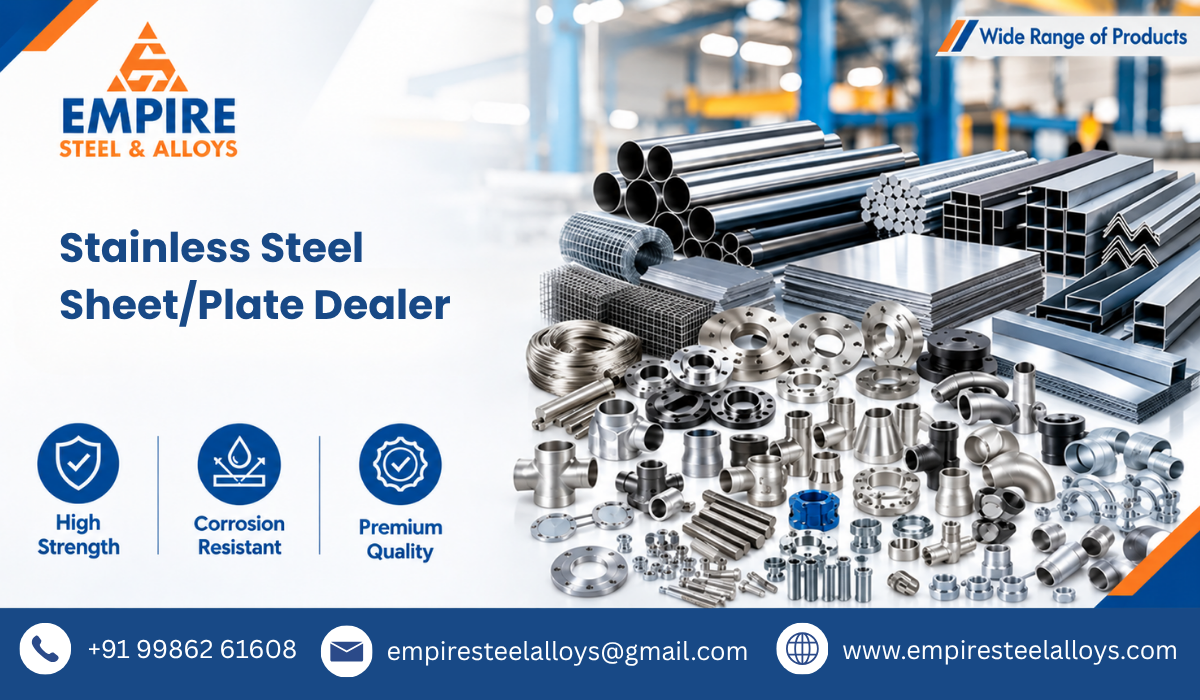
Angle / Channel / Flat Dealer - EMPIRE STEEL & ALLOYS
Finding the right steel sections for fabrication, structural frameworks, machinery, or industrial infrastructure requires more than comparing prices. Buyers need suitable dimensions, reliable material quality, consistent supply, and products that match their project specifications. Choosing an experienced Angle / Channel / Flat Dealer can simplify procurement and help reduce material wastage, fabrication delays, and unexpected costs.
EMPIRE STEEL & ALLOYS caters to steel procurement requirements across industrial and manufacturing markets, helping buyers identify appropriate steel products for their applications. Whether you are sourcing structural sections for a factory in Peenya or fabrication materials for an industrial project in Bommasandra, understanding the differences between angles, channels, and flat bars helps you make an informed purchasing decision.
What Are Steel Angles, Channels, and Flat Bars?
Steel angles, channels, and flat bars serve different purposes in construction, engineering, and fabrication. Each profile offers specific characteristics that make it suitable for particular applications.
- Steel Angles: L-shaped sections commonly used for brackets, supports, frames, reinforcements, and structural connections.
- Steel Channels: Channel-shaped sections frequently used in equipment frames, structural supports, mounting arrangements, and industrial fabrication.
- Steel Flat Bars: Rectangular solid sections used for brackets, base supports, fabrication components, plates, and general engineering work.
A professional Stainless Steel Angle Dealer can help buyers identify suitable stainless steel grades for applications involving moisture, cleaning chemicals, or corrosive environments. Similarly, a Stainless Steel Channel Dealer and Stainless Steel Flat Bar Dealer can assist with selecting sections according to the required dimensions, finish, and operating conditions.
EMPIRE STEEL & ALLOYS can be approached to discuss steel section requirements based on intended use, material type, and procurement specifications.
Material Types and Technical Considerations
The correct material depends on the operating environment, load requirements, fabrication method, and budget. Buyers should distinguish between stainless steel, mild steel, carbon steel, and alloy steel before placing an order.
- Stainless Steel: Suitable for applications where corrosion resistance, hygiene, or surface appearance is important. The appropriate grade depends on exposure conditions and service requirements.
- Mild Steel: Commonly used in general fabrication, frames, supports, industrial structures, and workshop projects. Its suitability depends on the required strength, dimensions, and protective coating.
- Carbon Steel: Used in a broad range of structural and engineering applications. The precise grade and mechanical properties should be checked against the applicable specification.
- Alloy Steel: Selected for particular mechanical or service requirements where alloy composition and specified properties are important.
When working with a Mild Steel Angle Dealer, Mild Steel Channel Dealer, or Mild Steel Flat Bar Dealer, confirm the section dimensions, thickness, length, and applicable material standard. For specialized requirements, a Carbon Steel Angle Dealer, Carbon Steel Channel Dealer, Alloy Steel Angle Dealer, or Alloy Steel Channel Dealer should be able to clarify whether the requested product matches the specified grade and application.
Before purchasing, verify the material grade and technical requirements against the project drawings, purchase specification, or applicable engineering standard.
Key Benefits and Industrial Applications
Steel sections are widely used because they can be cut, drilled, welded, assembled, and incorporated into different fabrication designs, subject to the material grade and appropriate processing procedures. Selecting the correct profile helps support practical fabrication, installation, and maintenance requirements.
Common applications of angles, channels, and flat bars include:
- Manufacturing and Engineering: Machine frames, equipment supports, fabrication assemblies, and mounting structures.
- Construction and Infrastructure: Structural supports, framework components, brackets, and reinforcement applications where the design permits.
- Automotive and Industrial Clusters: Fabricated fixtures, workshop equipment, and production-line support structures.
- Warehousing and Logistics: Storage systems, equipment frames, and material-handling installations.
- Food Processing and Pharmaceutical Facilities: Stainless steel components selected according to hygiene, cleaning, and corrosion-resistance requirements.
- General Fabrication: Gates, platforms, support frames, base plates, and custom-built assemblies.
Businesses operating in Bangalore, Jigani, Peenya, Bommasandra, and Bidadi may require different combinations of steel sections depending on their production processes. Buyers in Hosur, Krishnagiri, Salem, Mysore, Hassan, and Tumkur may also need materials suitable for local manufacturing, construction, and engineering projects.
Steel Procurement Across Bangalore, Karnataka, Tamil Nadu, and Andhra Pradesh
Industrial buyers often search for an Industrial Steel Angle Near Me, Industrial Steel Channel Near Me, or Industrial Flat Bar Near Me when they need materials quickly or want to reduce transportation and handling complications.
Procurement requirements can vary across Bangalore, Bommasandra, Jigani, Peenya, Dabaspet, Nelamangala, and Doddaballapur. Other relevant industrial and manufacturing locations include Vasanth Narasapura, Tumkur, Kunigal, Narasapura, Vemagal, Nanjangud, Kumbalgodu, and Bidadi.
For buyers in Karnataka, locations such as Mysore, Hassan, and Tumkur represent additional markets for industrial and fabrication materials. In Tamil Nadu, Hosur and Salem are relevant manufacturing centres, while Krishnagiri also has industrial procurement requirements. Buyers in Hindupur, Anantapur, and other parts of Andhra Pradesh may have their own project-specific sourcing needs.
EMPIRE STEEL & ALLOYS can be approached to discuss product availability, required specifications, quantities, and delivery feasibility. Buyers should confirm current stock, serviceable delivery locations, and dispatch timelines directly rather than assuming that every product is available in every city.
How to Choose the Right Steel Section Dealer
Selecting a suitable Angle / Channel / Flat Dealer begins with a clear material requirement. A lower quoted price may not represent the best value if the dimensions, grade, or supplied quantity do not match the purchase specification.
Before ordering steel angles, channels, or flat bars, confirm the following details:
- Product Profile: Specify whether you need an angle, channel, or flat bar.
- Material Grade: Identify stainless steel, mild steel, carbon steel, or alloy steel as required.
- Dimensions: Provide the section size, thickness, length, and dimensional tolerances where applicable.
- Quantity: Share the required number of pieces or total weight and clarify the pricing basis.
- Quality Documentation: Request applicable test certificates, inspection records, or material traceability documents when the project requires them.
- Finishing and Processing: Confirm cutting requirements, surface condition, and any additional fabrication needs.
- Commercial Terms: Compare taxes, transportation charges, packaging, delivery timelines, and payment conditions.
These checks are particularly useful when sourcing multiple profiles for a single project. They help buyers compare quotations accurately and avoid receiving materials that are unsuitable for their intended purpose.
Quality Checks, Storage, and Long-Term Performance
Correct selection is only one part of successful steel procurement. Materials should also be inspected when received and stored appropriately before fabrication or installation.
Check the supplied profile against the purchase order, including dimensions, quantity, grade identification, and visible surface condition. Where specified, verify material certificates and inspection documentation before accepting the consignment.
Store steel sections on suitable supports, away from standing water and avoidable contamination. Stainless steel should be protected from contamination by carbon steel particles, while mild and carbon steel may require suitable coatings or other corrosion protection depending on the environment.
For structural applications, verify that the selected section is suitable for the intended loads and installation conditions. A qualified engineer should determine structural adequacy where safety-critical performance is involved.
EMPIRE STEEL & ALLOYS can be contacted to discuss steel section requirements and clarify the specifications that should be included in a purchase enquiry.
Frequently Asked Questions
Specify the required profile, material grade, dimensions, length, quantity, and any finishing or certification requirements. These details help the dealer evaluate your requirements and prepare a suitable quotation.
Consider corrosion exposure, mechanical requirements, maintenance expectations, and budget. Stainless steel is often preferred for corrosion-sensitive environments, while mild steel is widely used in general fabrication. The final selection should match the application requirements.
Identify suppliers serving your location and confirm stock, specifications, pricing, and delivery options. Industrial areas such as Peenya, Bommasandra, Jigani, and Bidadi are useful locations to include in your supplier search.
Steel channels can be suitable for certain machine frames and supports, provided the selected section meets the required load, stiffness, dimensional, and fabrication criteria. Structural suitability should be verified for the specific design.
Provide the material grade, width, thickness, length, quantity, required finish, delivery location, and documentation requirements. Sharing complete specifications helps suppliers quote the correct material.
Product ranges vary by supplier. Ask EMPIRE STEEL & ALLOYS to confirm availability for each material grade and profile before finalising the order.
Verify the quantity, dimensions, grade identification, surface condition, and required documentation against the purchase order. Report any discrepancies before using the material.
Conclusion
Choosing the right steel sections starts with understanding the application, material properties, dimensional requirements, and delivery expectations. EMPIRE STEEL & ALLOYS can be contacted for enquiries involving angles, channels, and flat bars, helping industrial buyers establish clear specifications before procurement across Bangalore and surrounding markets in Karnataka, Tamil Nadu, and Andhra Pradesh.
Tags: Angle / Channel / Flat Dealer, Stainless Steel Angle Dealer, Stainless Steel Channel Dealer, Stainless Steel Flat Bar Dealer, SS Angle Dealer, SS Channel Dealer, SS Flat Dealer, Mild Steel Angle Dealer, Mild Steel Channel Dealer, Mild Steel Flat Bar Dealer, Carbon Steel Angle Dealer, Carbon Steel Channel Dealer, Alloy Steel Angle Dealer, Alloy Steel Channel Dealer, Industrial Steel Angle Near me, Industrial Steel Channel Near me, Industrial Flat Bar Near me, Angle / Channel / Flat Dealer in Bangalore, Angle / Channel / Flat Dealer in Bommasandra, Angle / Channel / Flat Dealer in Jigani, Angle / Channel / Flat Dealer in Mysore, Angle / Channel / Flat Dealer in Narasapura, Angle / Channel / Flat Dealer in Vemagal, Angle / Channel / Flat Dealer in Nanjangud, Angle / Channel / Flat Dealer in Andhra Pradesh, Angle / Channel / Flat Dealer in Karnataka, Angle / Channel / Flat Dealer in Tamil Nadu.