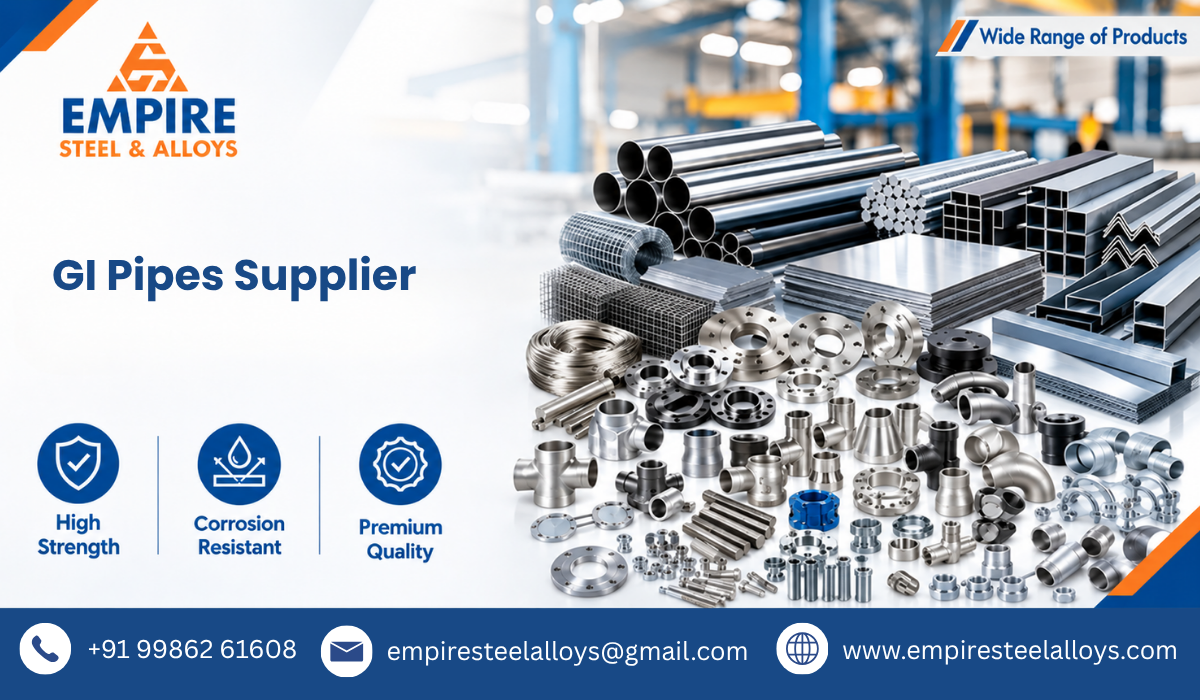
GI Pipes Supplier - EMPIRE STEEL & ALLOYS
Choosing the right GI Pipes Supplier is important for construction projects, industrial installations, agricultural systems, and infrastructure development. Galvanized iron (GI) pipes are widely used because their protective zinc coating helps reduce corrosion and supports reliable performance in suitable environments. However, selecting the right pipe requires more than comparing prices. Buyers must consider dimensions, coating quality, intended application, documentation, and delivery requirements.
For businesses operating across Karnataka, Tamil Nadu, Andhra Pradesh, and other industrial regions, a dependable supplier can simplify procurement and reduce the risk of receiving unsuitable materials. EMPIRE STEEL & ALLOYS can be considered when evaluating steel supply options for project requirements. Buyers should confirm current product availability, specifications, and applicable quality documents before placing an order.
Whether you need pipes for a commercial building in Bangalore or an industrial facility in Bommasandra, understanding the essential purchasing factors helps you make an informed decision.
What Are GI Pipes and How Do They Work?
Galvanized iron pipes are steel pipes coated with zinc to provide protection against corrosion. Although commonly called GI pipes, modern products are generally manufactured from steel and galvanized through an appropriate coating process.
The zinc coating acts as a protective barrier between the steel surface and the surrounding environment. Zinc can also provide sacrificial protection to exposed steel in certain conditions, helping limit corrosion around small damaged areas. However, galvanization does not make a pipe completely corrosion-proof.
A Best GI Pipes Supplier should help buyers identify products suitable for their intended use, whether that involves water distribution, structural applications, fencing, or general industrial services.
Before ordering, clarify whether the requirement is for galvanized pipes intended for fluid conveyance or for another application. These uses may involve different dimensional, pressure, and compliance requirements.
Materials, Technical Considerations, and Key Benefits
The performance of GI pipes depends on the base steel, zinc coating, manufacturing quality, dimensions, and installation environment. Buyers should evaluate these factors rather than relying on appearance alone.
Important considerations include:
- Pipe Dimensions: Confirm nominal bore, outside diameter, wall thickness, and required length according to the applicable product standard.
- Zinc Coating: Check the specified coating requirements and request supporting documentation where necessary.
- Mechanical Properties: Verify that the material is appropriate for the expected loads, service conditions, and installation method.
- Threading and Joining: Ensure compatibility with the fittings, couplings, and connection methods used in the project.
- Quality Documentation: Request relevant test certificates, inspection records, and conformity documents when required by the project.
The principal advantages of GI pipes include corrosion resistance in suitable environments, practical installation, availability in various sizes, and versatility across different industries. Nevertheless, prolonged exposure to aggressive chemicals, unsuitable water conditions, or persistent moisture can affect service life.
A qualified GI Pipes Dealer should provide clear product information and avoid promising a fixed lifespan without understanding the operating conditions.
Industry Applications and Regional Supply Requirements
GI pipes are used in several sectors, although the appropriate product specification depends on the application.
- Construction and Infrastructure: Residential buildings, commercial developments, service installations, and selected structural applications may require galvanized pipes for specified purposes.
- Agriculture: Farm infrastructure, fencing, and certain water distribution arrangements can use GI pipes when the material and operating conditions are suitable.
- Manufacturing and Industrial Facilities: Factories may use galvanized pipes for utility lines, supports, and other services, subject to the relevant engineering requirements.
- Warehousing and Commercial Facilities: Storage facilities and industrial buildings may require pipes for fabrication, general services, or designated installation systems.
Procurement needs can differ across industrial locations. Buyers may search for a GI Pipes Supplier in India serving Bangalore, Bommasandra, Jigani, Peenya, Dabespet, Nelamangala, and Doddaballapur. Other relevant industrial and manufacturing areas include Hosur, Krishnagiri, Salem, Tumkur, Vasanth Narasapura Tumkur, Kunigal, Hassan, Mysore, Nanjangud, Narasapura, Vemagal, and Hindupur.
Projects around Kumbalgodu and Bidadi in Karnataka, as well as industrial facilities across Tamil Nadu and Andhra Pradesh, may also require dependable procurement arrangements. Availability, delivery coverage, and lead times should be confirmed directly with the supplier rather than assumed from the location.
Common Buyer Problems and How to Select the Right Product
Common purchasing problems include inconsistent dimensions, unclear coating specifications, incomplete documentation, delayed deliveries, and quotations that do not account for transportation or additional services.
When comparing a GI Pipes Wholesaler, dealer, or distributor, request a written quotation that identifies the product specifications and commercial terms.
Use this checklist before confirming an order:
- Define the application, operating environment, and required pipe sizes.
- Identify the relevant Indian Standard or other project-approved specification.
- Confirm the grade, wall thickness, coating requirements, and permissible tolerances.
- Request documentation and inspection details appropriate to the project.
- Compare the total delivered cost, minimum order quantity, taxes, packaging, and delivery schedule.
- Verify replacement terms for damaged or nonconforming materials.
For larger projects, a GI Pipes Distributor may be suitable for planned bulk procurement, while smaller buyers may prefer suppliers that can accommodate limited quantities. The right choice depends on stock availability, order size, service requirements, and commercial terms.
GI Pipes Price in India, Online Purchasing, and Supply Planning
The GI Pipes Price in India varies with diameter, wall thickness, pipe length, zinc coating requirements, applicable standards, order volume, and market conditions. Transportation costs can also influence the final delivered price, particularly for bulky orders.
Buyers searching for GI Pipes at Best Price should compare quotations based on equivalent specifications. A lower rate may reflect a different thickness, coating requirement, product standard, or delivery arrangement.
If you are looking for GI Pipes Near Me, GI Pipes Supplier Near Me, or GI Pipes Near Me in India, evaluate whether the seller can meet your delivery schedule and provide the required documents. Local sourcing may simplify logistics, but proximity alone does not establish product quality.
Businesses looking to Buy GI Pipes Online or find GI Pipes for Sale should obtain written confirmation of dimensions, quantities, taxes, freight, dispatch timelines, and return conditions before making payment.
For bulk or international orders, buyers considering a GI Pipes Exporter should also verify export documentation, destination-country compliance, packaging, shipping terms, and applicable import requirements. Export capabilities and delivery coverage must be confirmed with the individual supplier.
Storage, Maintenance, and Performance
Proper storage and handling can help preserve the protective coating and maintain the condition of GI pipes before installation. Store pipes in a well-drained, ventilated area and avoid prolonged contact with standing water or persistent moisture.
Inspect delivered pipes for coating damage, visible corrosion, dimensional discrepancies, and other defects before installation. Where coating damage occurs during handling or fabrication, use a suitable repair method compatible with the applicable specification.
For demanding industrial environments, evaluate the effects of chemicals, moisture, temperature, and operating conditions before selecting galvanized steel. Appropriate material selection and routine inspection help support dependable performance throughout the intended service life.
Frequently Asked Questions About GI Pipes
Confirm dimensions, wall thickness, coating requirements, intended application, relevant standards, documentation, and total delivered cost. Request a written quotation based on your exact specifications.
They can be suitable for certain water systems, depending on local regulations, water chemistry, pressure requirements, and the applicable product specification. Confirm suitability with the project engineer and relevant authorities.
Pipe size, thickness, coating, quantity, manufacturing specifications, market conditions, taxes, packaging, and transportation all influence the quotation.
Compare documented specifications, product availability, delivery commitments, quality records, commercial terms, and after-sales support rather than relying solely on location or price.
Yes, subject to supplier capacity and availability. Share the bill of quantities, required specifications, delivery location, and expected schedule to obtain a suitable quotation.
No. Suitability depends on coating quality, environmental exposure, installation details, and maintenance requirements. Highly corrosive environments may require alternative materials or additional protection.
Store pipes in a well-drained, ventilated area and avoid prolonged contact with standing water. Inspect for coating damage, corrosion, and installation defects, and follow appropriate repair and maintenance procedures.
Conclusion
Selecting the right GI Pipes Supplier involves balancing technical suitability, verified quality, delivery reliability, and overall cost. By comparing equivalent specifications and confirming supply terms, buyers across Karnataka, Tamil Nadu, Andhra Pradesh, and other Indian markets can make more informed procurement decisions.
Contact EMPIRE STEEL & ALLOYS to discuss your requirements and verify current availability, specifications, documentation, and commercial terms before finalizing an order.
Tags: GI Pipes Supplier, Best GI Pipes Supplier, Top GI Pipes Supplier, GI Pipes Near me, GI Pipes Exporter, GI Pipes Wholesaler, GI Pipes Dealer, GI Pipes Distributor, GI Pipes Supplier in India, GI Pipes Near me in India, GI Pipes Supplier Near Me, GI Pipes at Best Price, GI Pipes Price in India, GI Pipes for Sale, Buy GI Pipes Online, GI Pipes Supplier in Bangalore, GI Pipes Supplier in Bommasandra, GI Pipes Supplier in Jigani, GI Pipes Supplier in Mysore, GI Pipes Supplier in Narasapura, GI Pipes Supplier in Vemagal, GI Pipes Supplier in Nanjangud, GI Pipes Supplier in Andhra Pradesh, GI Pipes Supplier in Karnataka, GI Pipes Supplier in Tamil Nadu.